Email: sale10@kfqizhongji.com Hours: 24 Hour Service - 7 Days a Week
Location: No. 299, Jincheng East Road, Xinwu District, Wuxi City, Jiangsu, China
Email: sale10@kfqizhongji.com
Phone: +86-18118900837
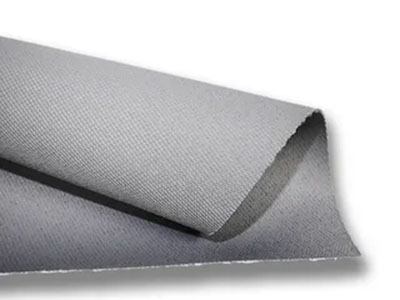
| Temperature Resistance | From -50 C Degree To 500 C Degree | Weight | 580 G/M2 |
|---|---|---|---|
| Thickness | 0.45 Mm | Coating | Silicone Rubber On Both Side |
| Width | 1.5 M | Alkali Content | Alkali Free |
| Color | Silver Grey | Roll Length | 50 Meter |
| Application | Shipping Building | Origin | China |
| Highlight | fiberglass cloth roll,welding fire blanket rolls | ||
Product Description
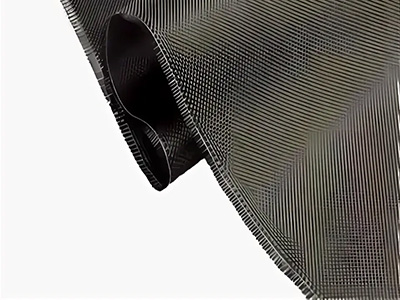
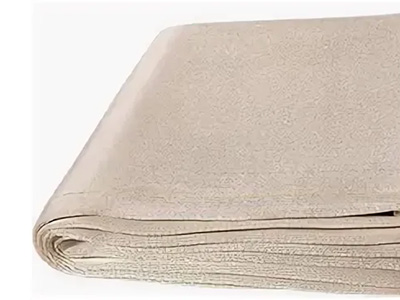
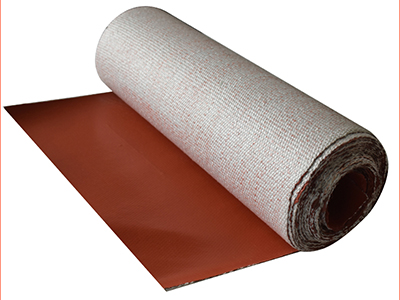
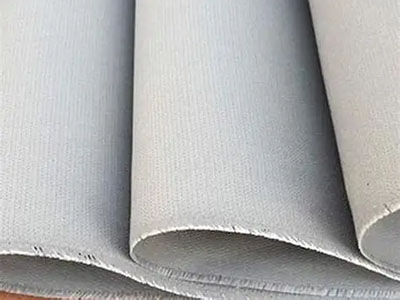
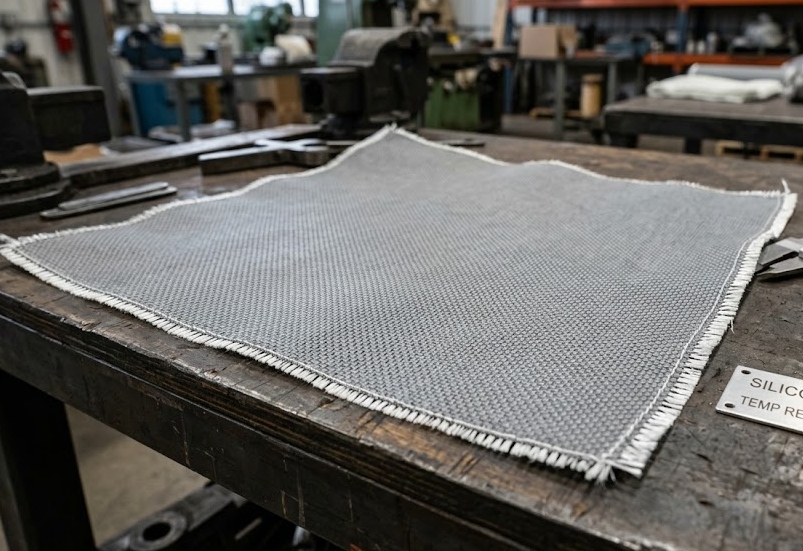
Medium Weight Silicon High Temperature Fiberglass Fabric For Shipping Building Insulation
Description:
Silicone coated fabrics are the perfect choice for protecting a variety of hoses, lines, wires, cables and equipment assemblies such as electronic enclosures, valves, robotic heads, festoon cables, EAF cables, etc., from exposure to high temperature, molten metal splash, slag, welding splatter, UV light, abrasion and contamination.
These fabrics offer high-temperature and heat resistance, along with the ability to shed welding splatter and molten steel & aluminum splash. Typical applications are as welding curtains or blankets, or high-temperature protection blankets for engine exhaust components or industrial equipment, steam and gas turbines.
Parameter List:
| Style | No. SI233-1153 | ||
| Coating | Silicone rubber 2 sides | ||
| Weight | 580 ± 25 g/m2 | 17 ± 0.74 oz/yd2 | ASTM D3776-96 |
| Thickness | 0.45± 0.02 mm | 0.017 ± 0.0007 inch | ASTM D1777-96 |
| Color | grey | ||
| Fire resistance | Flame retardant | ||
| Working Temp. | Glass fabric up to 5500C (10000F) Silicone rubber coating up to 2600C (4800F) | ||
Typical Applications:
- Electric insulation: it features high grade of electric insulation and bear a load of high voltage. It fits for making products like insulation cloth and sleeves etc.
- Non-metallic compensator: used as pipeline flexible coupling, non-metallic compensator helps to avoid damage caused by heat expansion and cold contraction. This membrane material specially fit for use in industries of petroleum, chemical engineering, cement, iron and steel and energy sources due to its special features of temperature resistance, anti-corrosion, anti-aging, and good elasticity and toughness.
- Anti-corrosion sector: It is good to be used as inner and outer anti-corrosion layer featuring excellent corrosion resistance, temperature resistance and high strength. It proves to be an ideal anti-corrosion material.
- Others: Apart from above application, it can also be used as sealing material, temperature resistant and anti-corrosion conveyer belt and packaging material.
Shrink oven, fireproof curtain, isolated liner.
Advantage:
- Temperature resistance, it can continuously work under -70℃ to 280℃
- Weatherability: Good resistance to ozone, oxygen, sunlight and aging, long using life up to 10 years.
- Good electric insulator, dielectric constant 3~3.2, break down voltage between 20~50KV/mm,
- Good resistance to chemical corrosion; grease and water proofing and easy to wash and clean.
- High strength; soft and tough, and can be cut into small pieces.
Discover heat resistant fibers, like glass fibers, vital for crafting fabrics that withstand scorching heat.
PTFE coated fiberglass fabric features high temperature resistance, corrosion resistance and electrical insulation, making it suitable for harsh environmental conditions and providing long-term stable solutions.
Exploring the safety of PTFE coated fiberglass fabric, known for its Teflon coating and robust build, is essential. Is this coated fabric truly reliable?
Ceramic fiber wool can work continuously in an environment of 983°C (1800°F), up to 1260°C (2300°F), and the melting point temperature of ceramic fiber paper is 1648.9°C (3000°F).
Food handling strategies differ extensively, yet some typical instances that count on reliable warm monitoring consist of cooking, emulsifying, fermenting, sterilizing, and roasting.